The personal meets time
Memory here is not an archive, but a living presence that continues to speak.
Author • Texts • Essays • Creative Projects • Media
I write where the personal does not end with the individual, but continues through time, memory and others. Here I gather books, texts and projects — and the traces words leave behind.
♫ Listen to the song based on this text
About
I write about those places where the personal meets time — where memory is not history, but an experience that continues to speak.
I am interested in language when it is strong. And when it is not afraid to be uncomfortable.
I live and work in Bulgaria. I publish my own texts and create books, music and creative projects, where an idea can begin as a word and continue as a book, a song, an image, or a format.
I look for those stories that rarely receive attention — in memory, in silence, and in the things left unsaid.
Memory here is not an archive, but a living presence that continues to speak.
The interest is in words when they carry nerve, clarity and a refusal to play safe.
Texts and projects searching for their form without losing their inner weight.
Book
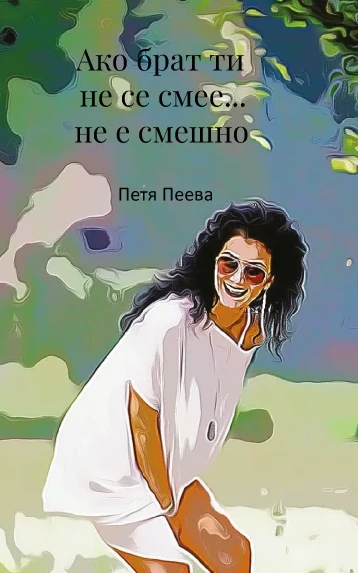
“If Your Brother Doesn’t Laugh…” is a book that is not simply read — it is experienced.
Between sarcasm, social satire and lyrical prose, the texts move along the sharp edge of Bulgarian reality — from apartment blocks to London, from supermarket checkout lines to handmade personal happiness.
This is not a novel and not classical poetry. It is an anthology of genre-fluid writing — essays, mini-stories, poetic prose and publicistic reflections that mix humour with existential sadness, personal experience with social observation.
Modern Bulgarian lyrical prose
with a publicistic voice
and a therapeutic function.
Book Structure
When everyday life begins to resemble satire.
Short texts in which the world around us is seen through sharp humour and sarcastic sensitivity. Neighbours, modern trends, social absurdities and human weaknesses turn into small satirical scenes — sometimes funny, sometimes uncomfortably precise.
Here grotesque meets self-irony, and laughter often leaves behind a slight unease. Because in these miniatures, the reader almost always recognises their own time.
When words begin to listen.
This part gathers short poetic texts built from images, metaphors and personal experiences. Here language becomes quieter, but also deeper.
Memory, love, doubt and time become an inner conversation. This is poetry that seeks not so much answers as movement — that almost invisible movement of thought and feeling.
When questions about the world become personal.
The final part gathers longer texts and reflections on the contemporary world, history and the moral choices people face. Here personal stories meet public questions, and observation gradually turns into contemplation.
The themes are compassion, responsibility, friendship, homeland and the quiet voice of human conscience. This is the space where the book stops observing and begins to ask — and to search for meaning beyond the noise of time.
Selected Excerpts
Three entrances into the voice of the book. I selected three short excerpts — one from each part — so the website can reveal the irony, lyricism and moral weight of the book without giving away too much.
“...Then came a 13-centimetre dog, branded with a Gucci harness and boutique leash, carried by a freshly trained 90-kilo man.
After him came the woman of his bright future. According to her horoscope, today her planets must have been in powerful astro-facts.
I suddenly felt awkward... There I was among these people with my archaic name Petya, my pink sneakers and complete lack of an ascendant. I got embarrassed and left. I went looking for éclairs. But they had apparently become poisonous and full of palm oil.
They offered me a natural bar, free of gluten, free of colourings, preservatives, sugars, sweeteners — free of everything. Created with radiant energy directly from the Japanese sun.
I couldn’t understand: was I supposed to eat it, or grow it?”
Social irony with modern absurdity.“How are we supposed to meet at all,
if I am Russian literature,
and you are haiku?
There is no such anthology,
which means it is not impossible…
We simply have not been created yet.”
Brief, clean, and with its own acoustic quality.“Before you and me, my friend, there emerges the ‘great’ possibility of remaining trapped in the dark.
You are probably thinking: ‘There are no superhumans left in this wasteland, in our Bulgaria sinking into darkness…’ and a claustrophobic heaviness settles in your chest.
We have become so deeply lost that fewer and fewer things still matter.
Do you realise it?”
Moral nerve and social weight.Video Interview
CASH Media has published my texts on topics related to culture, society and international processes.
View PublicationsInterviews
The professional path, the experience and the lessons work leaves behind.
Read the InterviewPublic Talks
A conversation on Darik Radio about the book “If Your Brother Doesn’t Laugh… It Isn’t Funny”.
View the ConversationTelevision Appearances
 ▶
▶
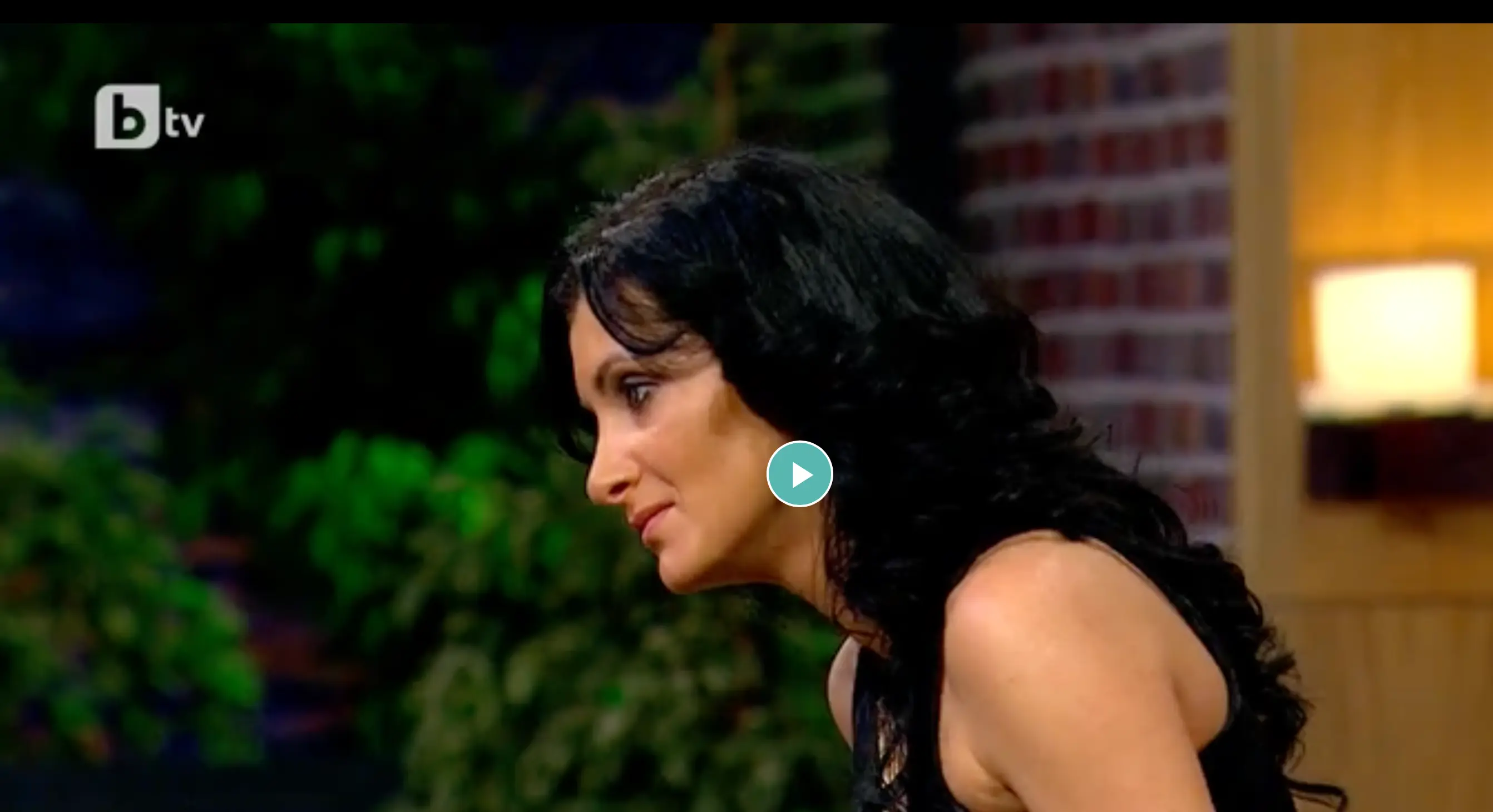
Appearance in the television format “Games of the Stars” on bTV.
Watch on bTVReception
Responses and words from people who recognise the power of a text not only by what is written, but by the trace it leaves behind.
Thank you to the people who shared their words about this book.
Journalist • Television Host
Welcome to the World of P.P.!
You are about to have a wonderful time, because it is a rare richness to read something written by a person with an X-ray eye, a razor-sharp mind, and insights not everyone can reach.
Petya takes you by the hand — and, if you allow her, by the throat too — and sends you down verbal cobblestone streets and rollercoasters so dizzyingly that your head will spin.
For her, it is no problem to take you from the village of Reselec to the gas chambers of the Holocaust, via Heathrow, and for extra flourish into Student Town.
Congratulations to us on a powerful new Bulgarian author!
Screenwriter • Television Host • Writer
I know only two people of this breed — people you drop into entirely unfamiliar waters and, shortly after, they start swimming with the fish. She is one of the two. Apparently they produce them in boutique batches on purpose, so they do not frustrate too many professional guilds at once.
But I have seen Petya (or Pi, as I call her) swim confidently in communications, cybersecurity, media, PR — and the last time she amazed me, she suddenly became an oil broker for NATO and similarly large clients on a fuel exchange in Monaco!
Now some invisible hand is lowering Pi into the waters of writing... and from here, you can imagine the rest yourselves. Words love her, and she loves them too. If this affair remains long-term, and Petya does not decide to become an astronaut or a fire dancer, I offer my explicit apologies to Georgi Gospodinov, haha!
And finally — Pi, I keep telling you that the title of this book is not true. It will not make your brother laugh. It will make him smile. Because talent and a pure heart always do exactly that.

Entrepreneur • Media Content • Business Development
I started it with curiosity…
and closed it with a quiet “ah...”
This book does not force itself on you. It does not try to be great.
And that is exactly why it is so powerful.
It makes you smile… but not loudly —
the kind of smile that comes from recognition.
From memories. From the people who have once been part of you.
And at some point you realise —
that not everything funny is light…
and not everything light is without meaning.
This is not just a book.
This is a feeling.
Projects
An educational children’s colouring book dedicated to countries around the world.
View the BookTrust. Betrayal. Truth.
A television social experiment about moral choice, trust and the price of truth under pressure.
Media
Interviews, appearances, publications and public conversations in which words meet a different environment and a different audience.
Appearance in the television format “Games of the Stars” on bTV.
InterviewsThe professional path, the experience and the lessons work leaves behind.
Public Talks“People from my generation value family enormously.”
PrintPublished texts on topics related to culture, society and international processes.
Contact
If you have an idea, a question, or a proposal for collaboration, you can write to me here.
Song
Lyrics by: Petya Peeva.
All rights to the lyrics are reserved © Petya Peeva.
Musical demo version. If anyone is interested in producing or collaborating on the project, they can get in touch via the website contact form.
Song
Lyrics by: Petya Peeva.
All rights to the lyrics are reserved © Petya Peeva.
Musical demo version. If anyone is interested in producing or collaborating on the project, they can get in touch via the website contact form.
Rights and Terms
The content of this website, including texts, images, excerpts, concepts and original materials, is protected under applicable copyright law. All rights to the published content belong to Petya Peeva unless explicitly stated otherwise.
Without prior written consent, reproduction, publication, distribution, adaptation or use of the content for commercial or public purposes is not permitted.
Only brief quotations are allowed, provided the author is clearly credited and an active link to the source is included.
TV Format
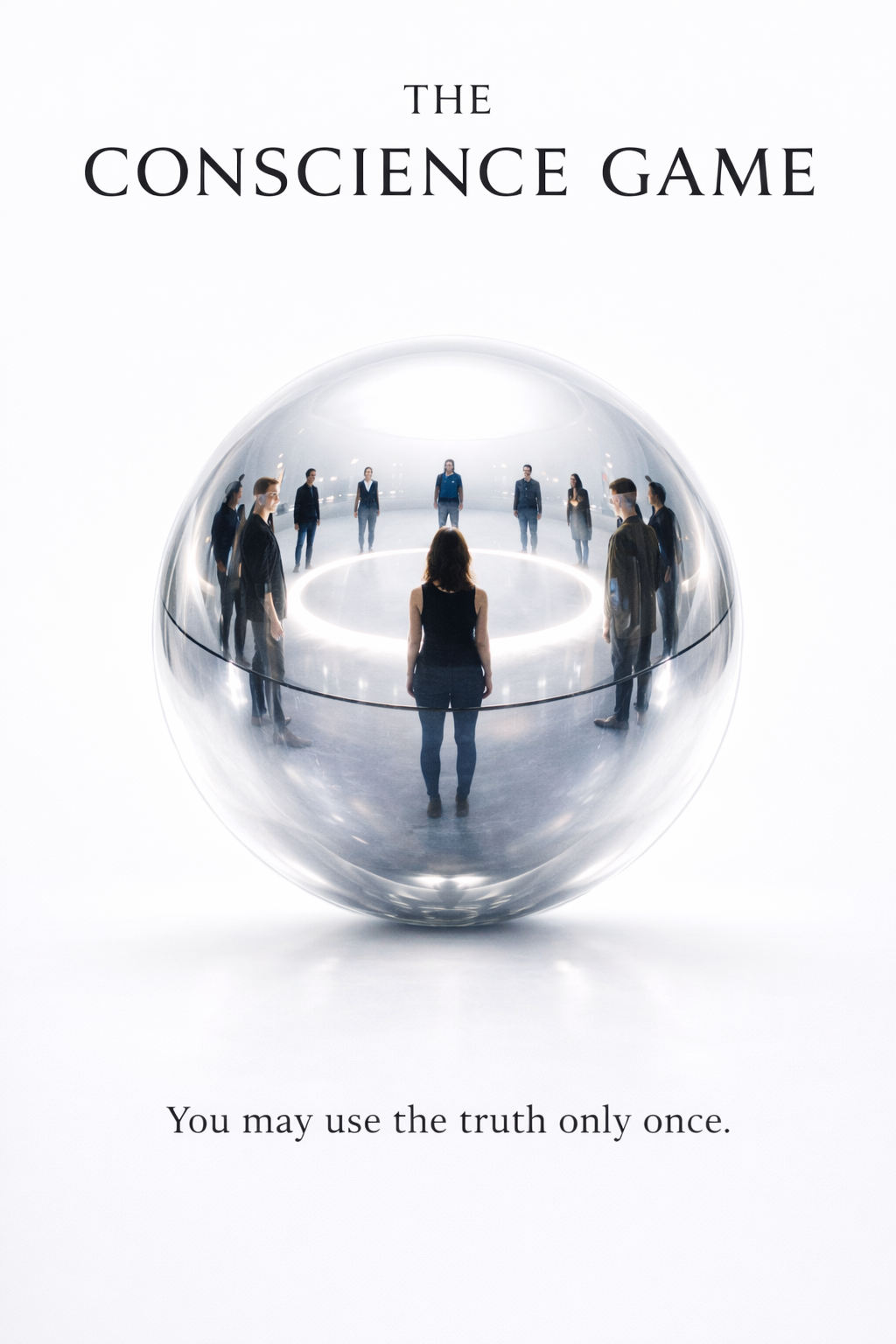
Trust. Betrayal. Truth.
How far would you go when the truth could cost you everything — and the prize could change your life?
The Conscience Game is a television social experiment that explores one of the most difficult territories of human behaviour — moral choice.
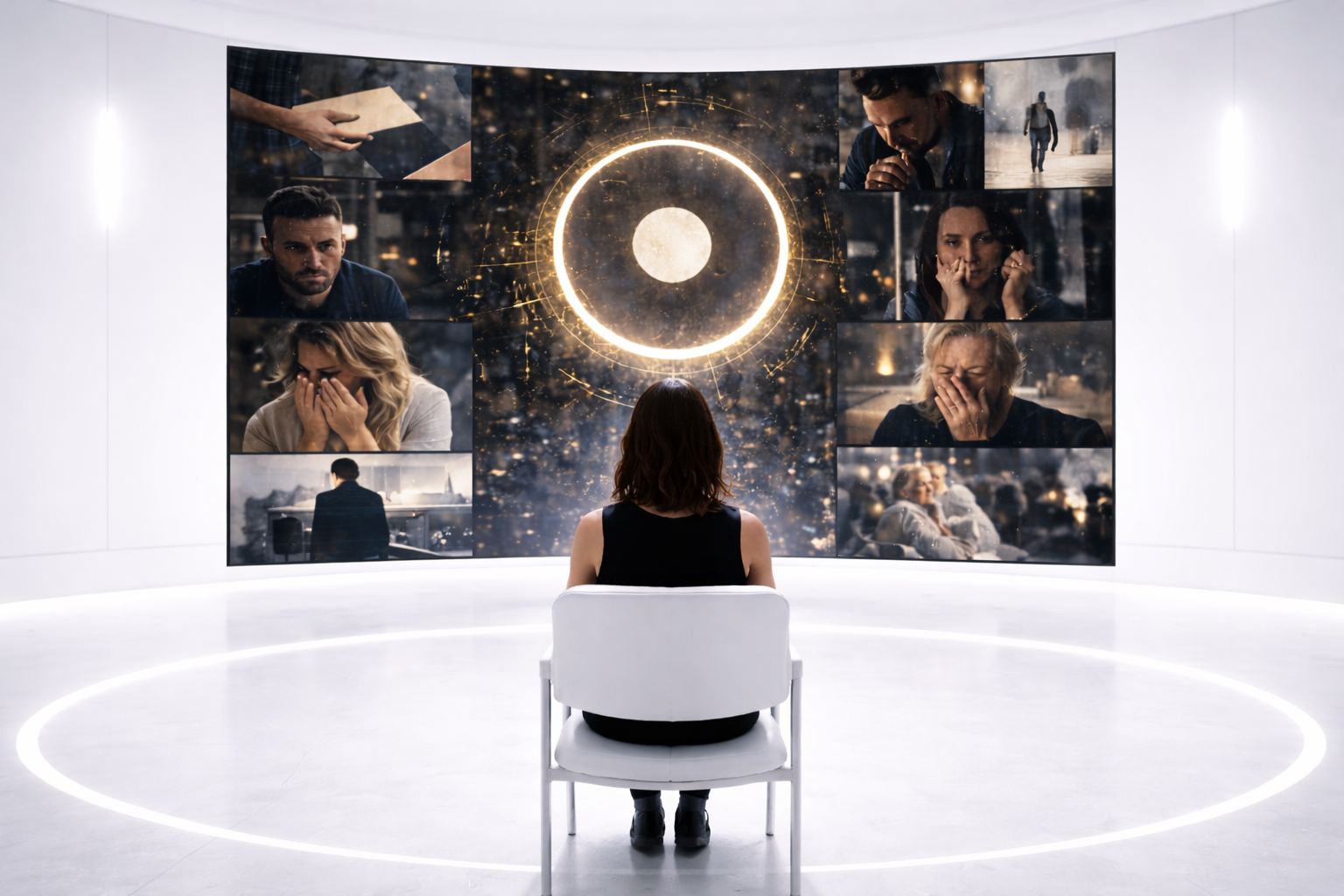
A group of participants enters a specially designed environment where they are confronted with situations that test their values, loyalty and personal limits.
Unlike formats in which tension comes from hidden roles, deception or exposure, the centre here is different: what happens when victory does not always coincide with what is right.
As the game progresses, trust between participants begins to fracture, alliances become fragile, and every decision acquires a moral cost.
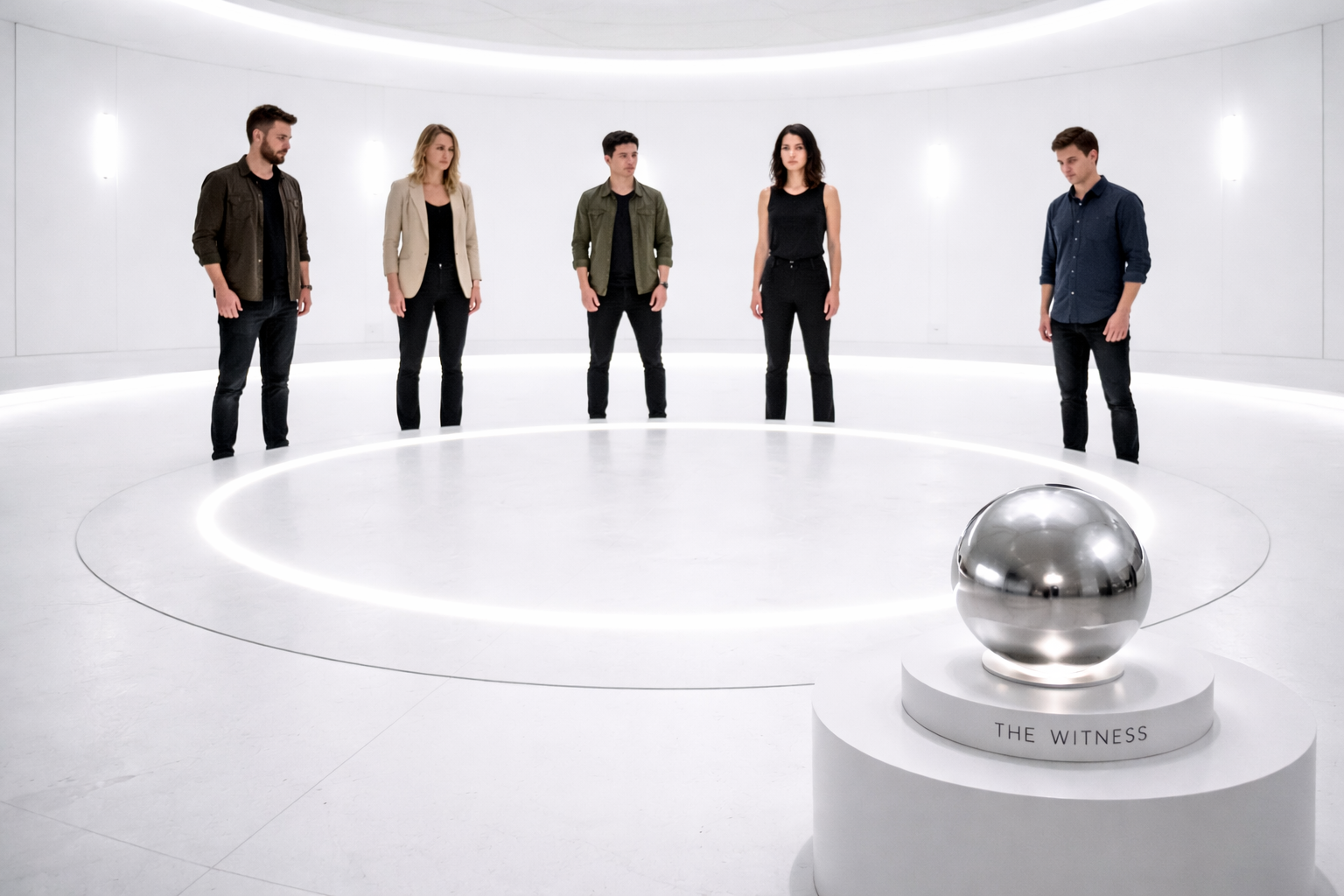
At the heart of the format stands a mysterious artefact — The Witness, whose role is rare but exceptionally powerful. At certain moments, it can change the course of the game and reveal hidden truths.
The Conscience Game combines elements of a social experiment, a strategic television game and a psychological competition, but focuses on something deeper than strategy: the question of who you are when no choice is easy.
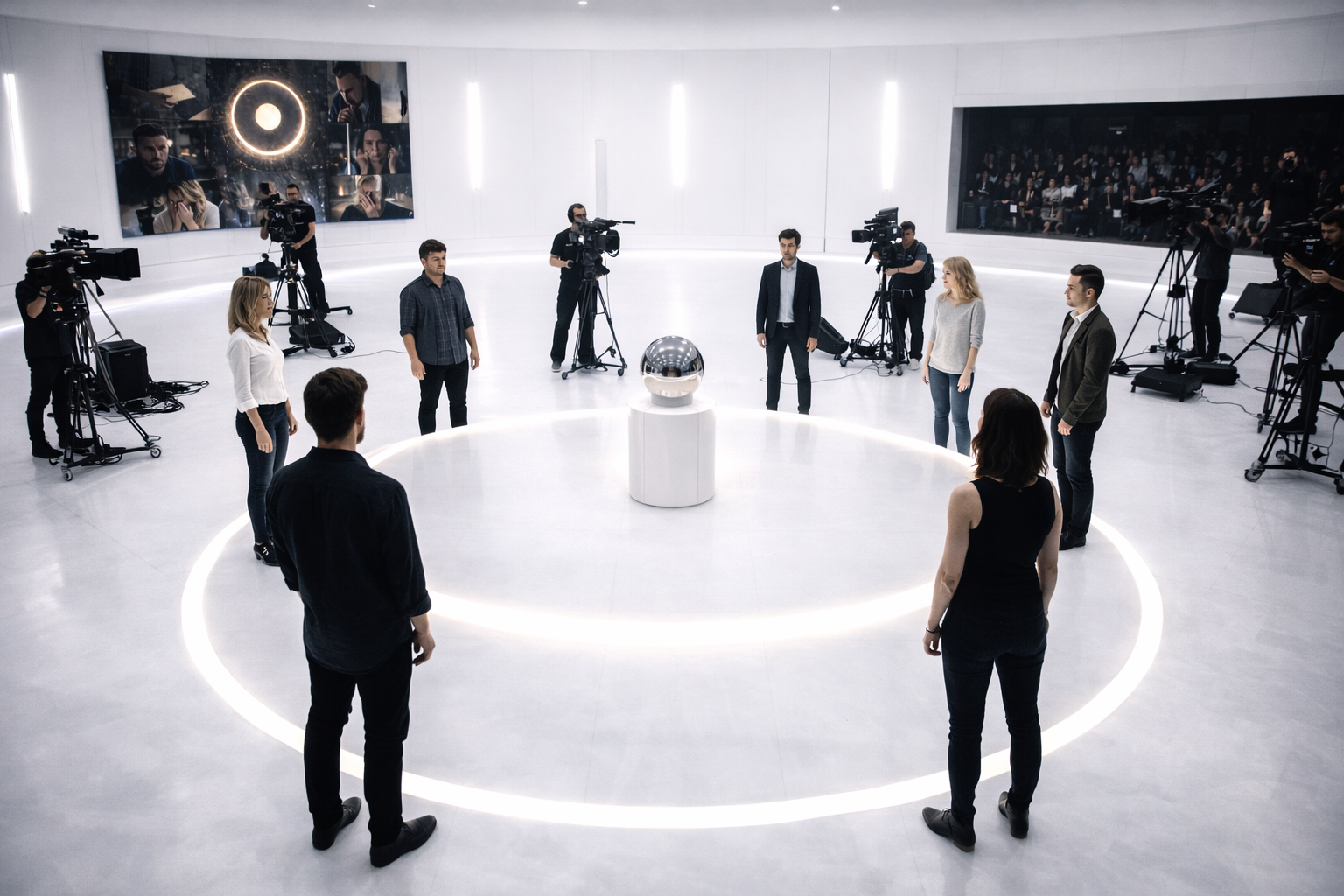
The format is built as a clean, almost sterile space in which every choice stands out sharply, and psychological tension replaces external noise.

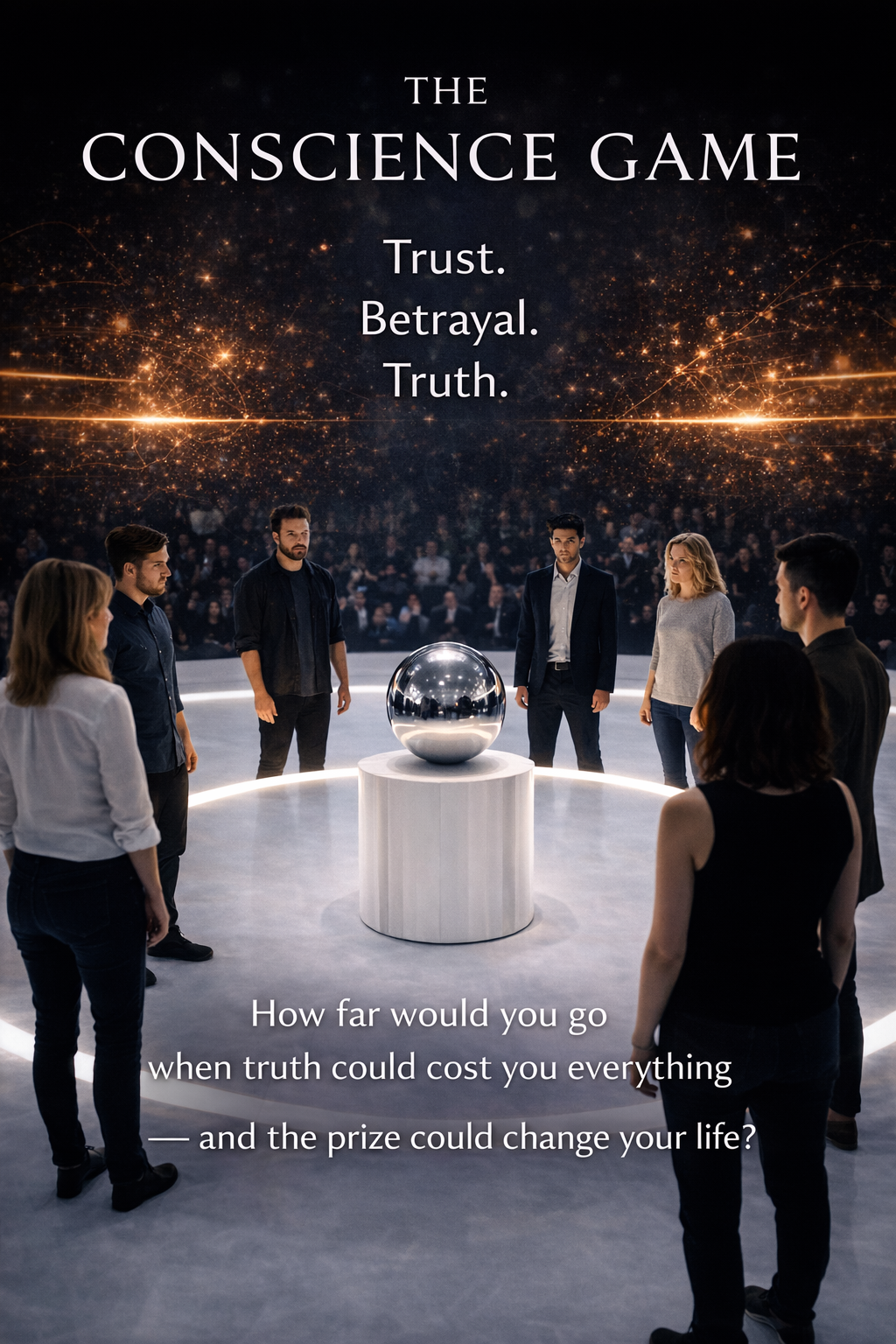
Original concept: Petya Peeva
The detailed structure and mechanics of the format are available upon request.
Petya Peeva is a Bulgarian author creating texts, books and creative projects. Her work moves between essays, personal writing, original ideas, song lyrics and concepts with cultural and emotional depth.
This website brings together books, excerpts, media appearances, musical demo projects and original concepts connected to writing, memory, identity and contemporary life.